
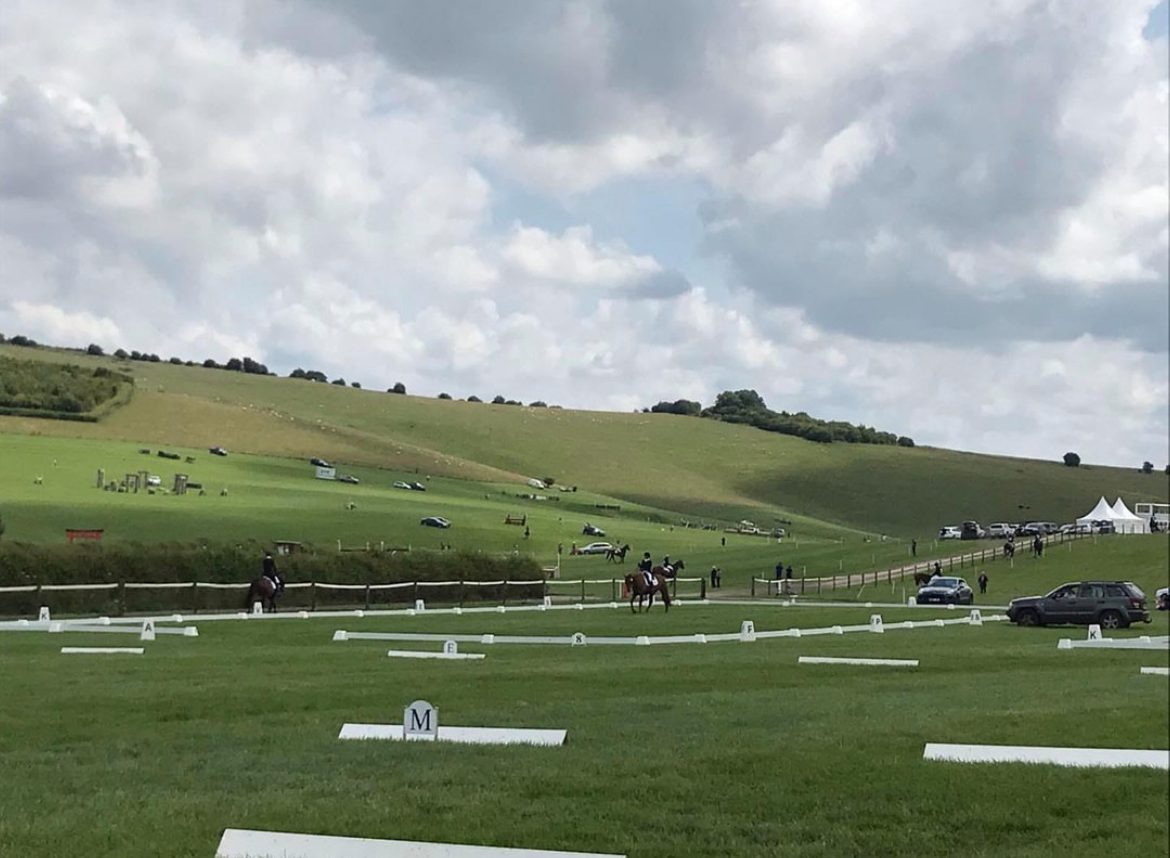
Do dressage judges play a role in rider motivation?
In my professional life I wear three hats: I’m an equestrian coach, a sports psychologist (in training) and a dressage judge. I think we can all appreciate the role of dressage judges in the promotion of correct training. But should judges take time to consider how their feedback impacts a rider’s motivation moving forward when writing their comments?
I remember many years ago, before I became listed, attending an introduction to dressage judging talk given by a well-known dressage judge. I remember her saying, “The thing about judging is, you work your backside off, you get paid next to nothing, no one remembers to make you a cup of tea and everyone hates you apart from the person who wins!” Dressage judging is tough and, unlike coaching, where in my experience you tend to be well liked, as a judge you have to come to terms with the fact that not everyone is going to agree with you and there’s a very strong chance that you are going to be the subject of derision. My point is that nobody gets into judging because it’s an easy way to earn money. You do it because you are invested in promoting good horsemanship, for the love of the sport and, most importantly, for the love of the horse.
British Dressage, to their credit, work to keep standards of judging high and I think I can say with confidence that the desire to help horse-and-rider combinations improve is ubiquitous amongst dressage judges. We take care to make sure the comments we offer are accurate, fair and constructive, but as well as considering the impact of our comments in terms of rider technique, should we begin to gain a greater understanding of the impact our comments have on rider psychology?
In my training as a sports psychologist, through both study and practice, I have gained an understanding of the impact the comments of a voice of authority can have on an athlete. A comment that is structured in a way that promotes a fixed mindset — a belief that ability is a fixed quality — rather than one that promotes a growth mindset, recognising the role of effort and how talent can be developed over time, is far less likely to motivate. And as focus, motivation and effort are vital in improving rider skill, this has to be an important factor for all judges to consider.
I think an important point to consider here is the difference between descriptive and evaluative language. If I were to describe the laptop I am currently writing this on using descriptive language, I might say it’s a silver MacBook, and if I invited a number of people to describe it, they would likely all agree. However, if I were to use evaluative language, I might say it’s an easy-to-use laptop or a well-functioning laptop. That would be my opinion, and these factors could potentially change; perhaps it would get old and start to become glitchy, or perhaps I might try to carry out a task on it that I find difficult. The problem comes when we use descriptive language in place of evaluative language, as we can give the rider a sense that the issue is fixed. For example, if we were to say “horse not supple”, the rider may infer that their horse lacks the ability to do well in the discipline. In addition, they may feel that they lack the ability to produce and ride their horse well enough to perform a decent dressage test.
If instead we change the comment to “horse working with correct paces but now needs to develop more suppleness”, this feels more achievable. Therefore, the rider is more likely to be motivated to go away and work to improve both their horse’s way of going and their own riding performance.
So, in summary, if we are going to be effective judges, is it important that our comments don’t just aim to educate, but also aim to motivate?


0 Comments