
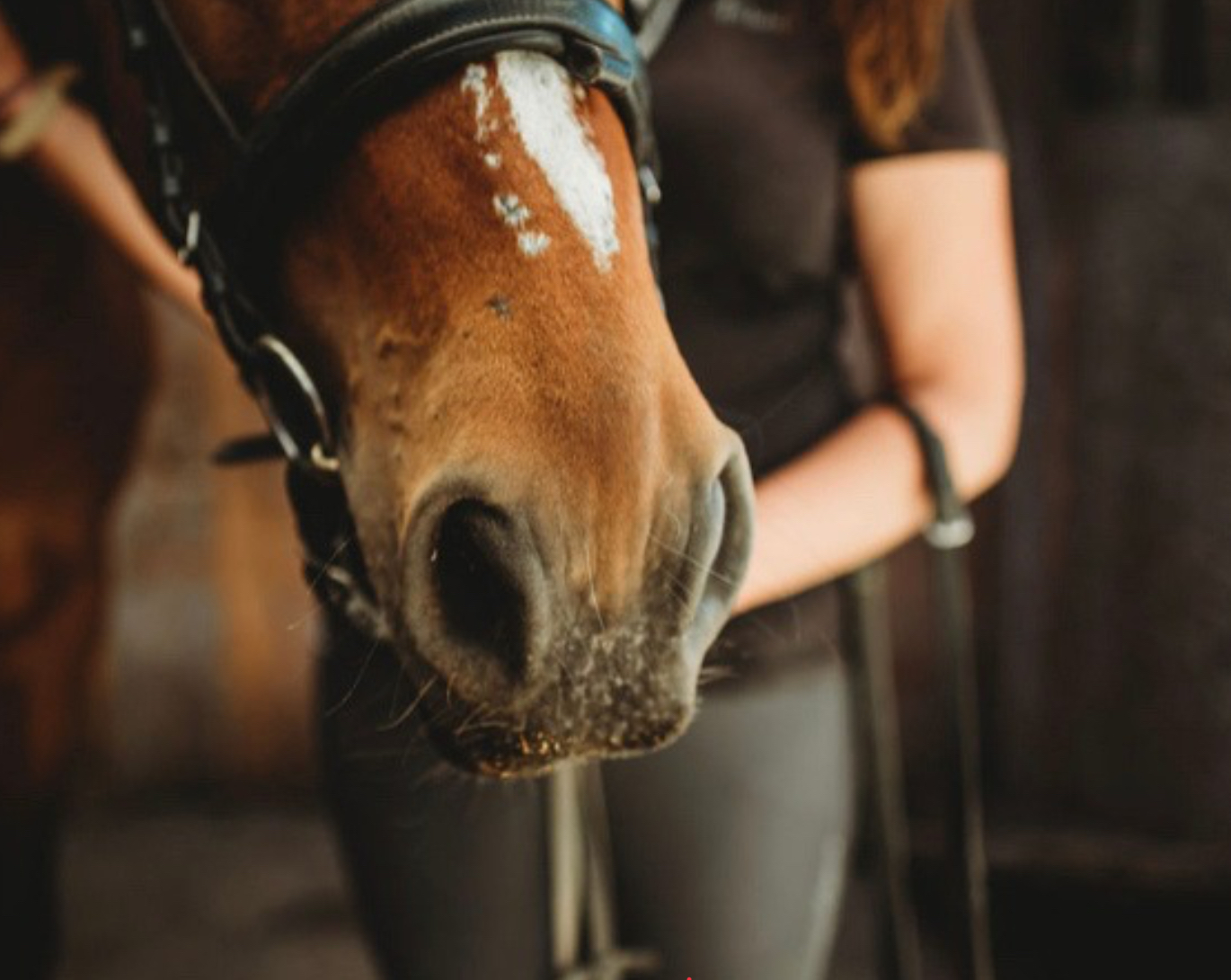
I have heard it being said that sports psychology is the art of stating the obvious and to many the idea that our horse feeds off our emotion state is certainly not a new one. However, the question is, do we give it as much thought day to day as we should and perhaps even more importantly do we take pro-active steps to manage our emotional state for the sake of our horse.
Polyvagal theory gives us co-regulation a useful framework for understanding why the horse–rider partnership is so sensitive, so dynamic, and sometimes so challenging. At its heart is the idea that nervous systems do not operate in isolation. Instead, they are constantly communicating, influencing, and regulating one another through subtle, largely non-verbal cues.
Ultimately the horse is a herd animal, its ancestors very survival relied on the ability to respond to changes in its fellow herd members autonomic nervous systems. So its not surprising our horses respond to even the slightest change in our own emotional state
A brief introduction to polyvagal theory
Polyvagal theory describes how the autonomic nervous system moves between different states in response to perceived safety or threat. In simplified terms, there are three primary states:
- Ventral vagal (regulated and safe): calm, curious, socially engaged, able to learn and adapt
- Sympathetic (mobilised): fight or flight, increased tension, speed, reactivity
- Dorsal vagal (shutdown): collapse, withdrawal, disconnection, low energy
Both horses and riders move fluidly between these states. Crucially, learning and skill development happen most effectively when the nervous system is regulated, not when it is braced for survival.
What is co-regulation?
Co-regulation refers to the way one nervous system can help stabilise another. Humans experience this all the time through tone of voice, facial expression, posture, rhythm, and breath. Horses, as highly attuned prey animals, are exceptionally skilled at reading these cues.
In the saddle, co-regulation means that the horse and rider are in constant nervous-system dialogue. Long before a horse responds to an aid, they are responding to the rider’s internal state as expressed through muscle tone, breathing, balance, and timing.
The rider’s role in regulation
A rider who is regulated, operating from a ventral vagal state, offers the horse clear signals of safety via cues such as steady, coherent breathing, elastic, responsive muscle tone. These cues allow the horse to remain present and calm. This is why a calm, centred rider can often settle a tense horse without appearing to “do” very much at all. On the other hand, a rider who is anxious, frustrated, or holding tension may still appear to be applying technically correct aids but the underlying state tells a different story.
Co-regulation works both ways
It’s important to remember that co-regulation is not a one-way process.
A reactive or anxious horse can pull a rider into sympathetic activation. A shut-down or disengaged horse can leave a rider feeling flat, ineffective, or frustrated. Many riders blame themselves for struggling with pressure or emotion, when in reality they are being neurologically influenced by their horse.
Understanding this removes a lot of unnecessary self-judgement. The goal isn’t to be immune to your horse’s state, but to become aware of it and able to return yourself to regulation.
Why technique alone isn’t enough
From a polyvagal perspective, this explains something riders experience all the time: why progress can feel inconsistent.
Skill execution and learning, what we might call procedural knowledge, require a regulated nervous system. When either horse or rider is disregulated, timing deteriorates, aids become louder, and mistakes multiply. The rider hasn’t suddenly lost skill; access to that skill has been compromised by nervous-system state.
This is also why “trying harder” rarely fixes tension problems. Regulation comes first. Technique follows.
Practical implications for training
Viewing riding through the lens of co-regulation shifts how we think about training:
- Self-regulation becomes a core riding skill, not an optional extra
- Breath, pauses, and rhythm are legitimate training tools
- Feel improves when the rider’s nervous system is stable enough to perceive subtle feedback
It also reframes leadership. Rather than controlling or overpowering the horse, the rider’s role becomes one of offering a calm, coherent nervous system that the horse can trust.
Redefining the partnership
At its best, the horse–rider relationship becomes a mutual regulation loop. The rider provides safety, clarity, and consistency. The horse provides honest feedback. Together, both nervous systems settle into a state where learning, connection and trust are possible.

0 Comments