
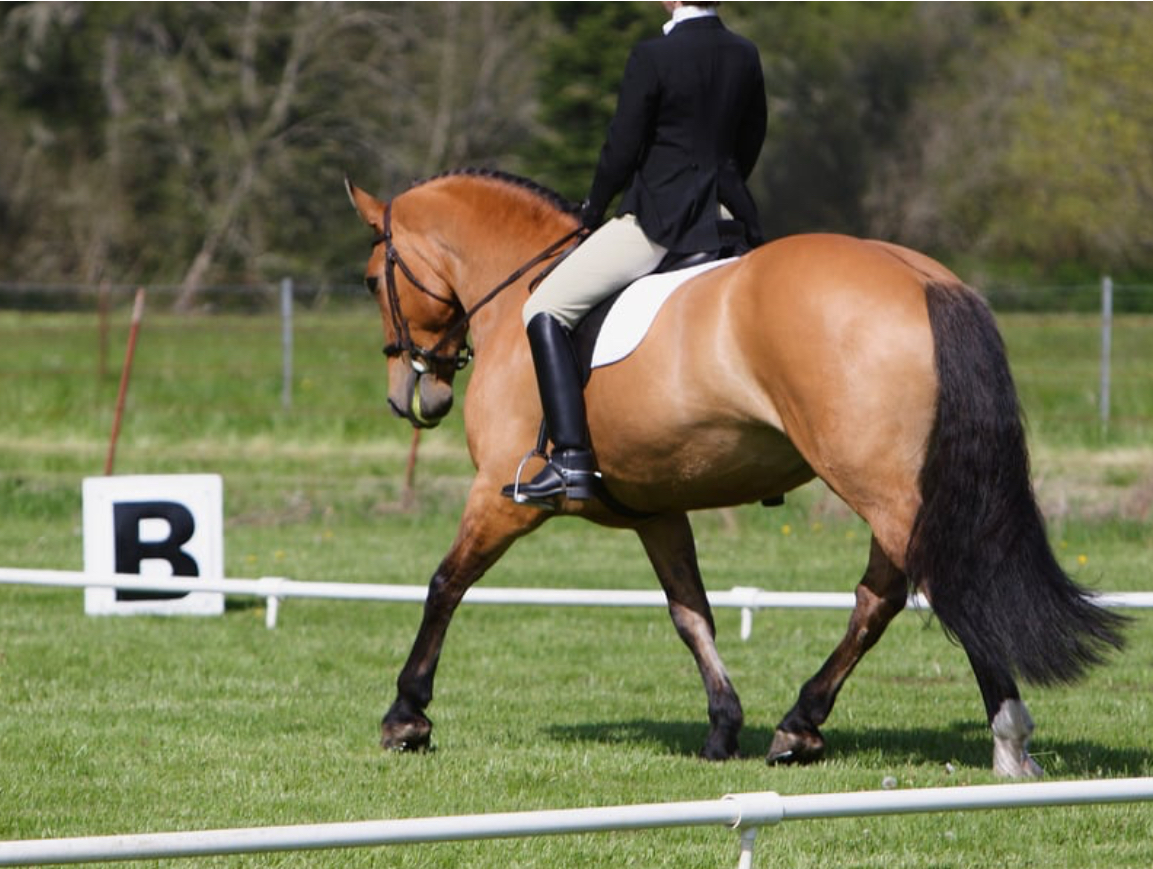
Finding Flow
Have you ever had a ride where you completely lost track of time?
Your horse felt tuned in, your body moved without overthinking, and everything just worked. You weren’t worrying about who was watching or whether you looked good you were simply riding. Many riders describe this as being “in the zone” or “locked in.” In psychology, it’s known as Flow.
In the early 1970s, psychologist Mihaly Csikszentmihalyi coined the term Flow to describe this state of complete absorption and peak performance. He spent decades studying when Flow occurs, why it feels so good, and how we can access it more often. His research showed that Flow isn’t accidental it’s shaped by specific conditions. For riders, understanding these conditions can help us create better rides, stronger partnerships, and more enjoyment in the saddle.
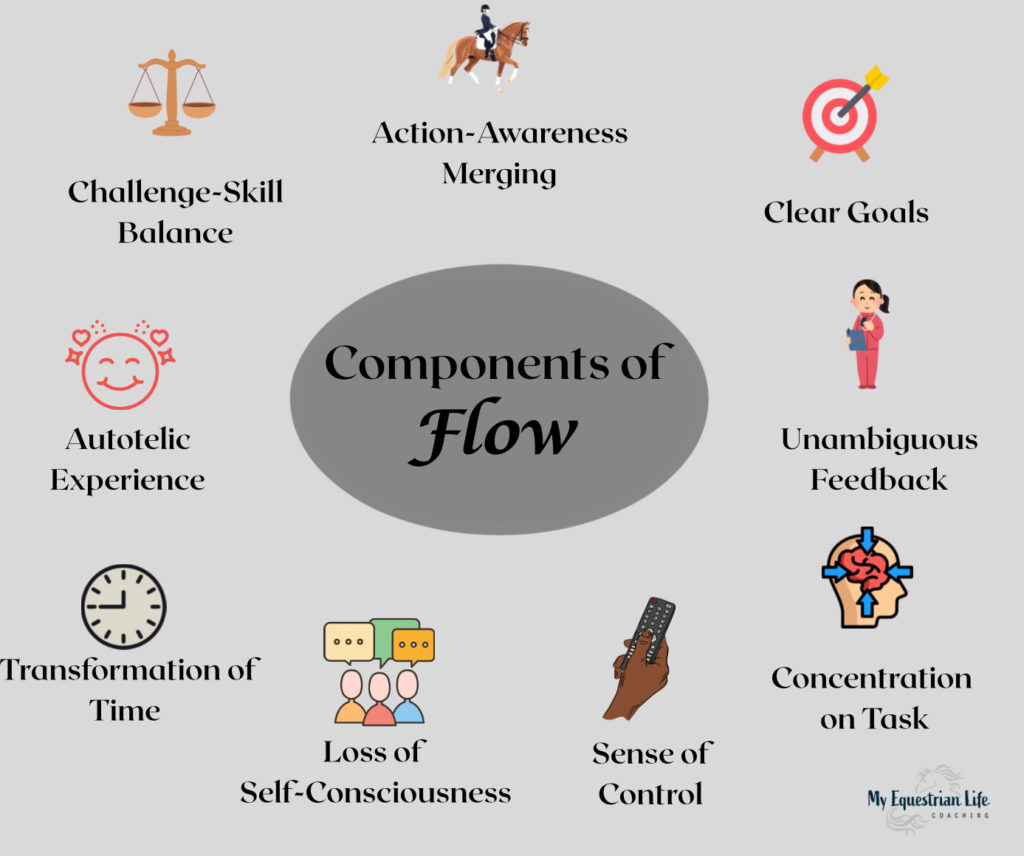
The 9 Components of Flow
1. Challenge–Skill Balance
Flow happens when the ride is challenging but achievable. A schooling session that’s too easy leads to boredom; one that’s too difficult leads to tension or frustration. Flow lives in the sweet spot, maybe introducing a new movement, riding a course that stretches you, or refining something just beyond your comfort zone.
2. Action–Awareness Merging
This is that magical feeling when your aids become instinctive. You’re not consciously telling yourself “Inside leg, outside rein” your body and your horse respond as one. Transitions feel seamless, turns feel natural, and communication feels effortless.
3. Clear Goals
Flow is easier to find when you start a ride with intention, having a clear focus eg. rhythm, straightness, relaxation, accuracy, gives your mind something to anchor to. Clear goals keep you present instead of scattered.
Clear goals keep you present instead of scattered.
4. Unambiguous Feedback
Horses are incredible feedback machines. You feel it instantly when something works. This feedback might come through your seat and hands, or externally from a coach on the ground. The key is that the feedback is clear and meaningful.
5. Concentration on the Task at Hand
Flow requires attention. When you’re fully absorbed in your horse’s rhythm, balance, and responses, there’s little room for distractions, whether that’s worrying about who’s watching, replaying a mistake, or thinking about your to-do list.
6. Sense of Control
Trusting your ability to influence the ride. You feel capable, adaptable, and confident in your skills, even if something doesn’t go exactly to plan.
7. Loss of Self-Consciousness
In Flow, you stop judging yourself. You’re not riding for appearances or approval. You’re simply riding. Many riders describe this as freeing, the pressure melts away, and the partnership comes to the forefront.
8. Transformation of Time
Ever notice how a 45-minute ride can feel like five minutes? Or how a single stride before a fence feels like it stretches forever? That’s Flow altering your perception of time.
9. Autotelic Experience
An autotelic activity is one that’s rewarding in itself. You’re not riding just for ribbons, scores, or validation, you’re riding because the act of riding is fulfilling. This intrinsic enjoyment is at the heart of Flow.
Creating Flow
Flow can’t be forced, but you can set the conditions that make it more likely to appear. Here are some practical, rider-specific ways to do that.
1. Set One Clear Focus for Each Ride
Instead of trying to fix everything at once, choose one primary intention for the session, rhythm, relaxation, straightness, accuracy, or feel. A single focus helps quiet mental noise and keeps you present. Ask yourself, “What do I want to feel or improve today?”
Ask yourself, “What do I want to feel or improve today?”
2. Match the Challenge to Today’s Reality
Flow lives between boredom and overwhelm. Be honest about how you and your horse feel today. If energy or focus is low, simplify. If everything feels easy, gently raise the challenge add precision, transitions, or patterns.
Progress isn’t always about doing more; sometimes it’s about doing better.
3. Ride in Short, Intentional Blocks
Flow often appears in focused bursts. Try riding in 5–10 minute blocks with a specific goal, followed by a brief mental reset on a loose rein. This keeps concentration high and prevents mental fatigue.
4. Tune Into Feel, Not Just Form
Flow relies heavily on kinaesthetic awareness, what you feel through your seat, legs, and hands. Occasionally soften your visual focus and ask:
- Does this feel lighter?
- Is the rhythm clearer?
- Is my horse more relaxed?
Let feel guide adjustments, not constant self-critique.
Let feel guide adjustments, not constant self-critique.
5. Trust Small Corrections
Overriding your horse with constant aids can pull you out of Flow. Make a clear request, then give your horse time to respond. Trust that subtle changes matter, they often lead to smoother communication and deeper absorption.
6. Reduce External Distractions
If possible, minimize interruptions during your ride. Put your phone away, avoid multitasking, and give yourself permission to be fully present. Even small environmental boundaries can help your mind settle into the task.
7. Let Go of Being Watched
Flow thrives when self-consciousness fades. If you notice yourself riding for an audience, gently bring your attention back to your horse’s rhythm or your breathing.
8. Use Your Breath as an Anchor
Breathing is one of the fastest ways to reconnect mind and body. Slow, steady breaths can help release tension and draw your attention back into the moment especially when things start to feel rushed or chaotic.
9. End on a Positive Note
Flow is reinforced by positive emotion. When something clicks — even briefly — acknowledge it. End the ride remembering what worked, not just what needs improvement. This builds motivation and makes Flow easier to access next time.
Flow is reinforced by positive emotion

0 Comments