
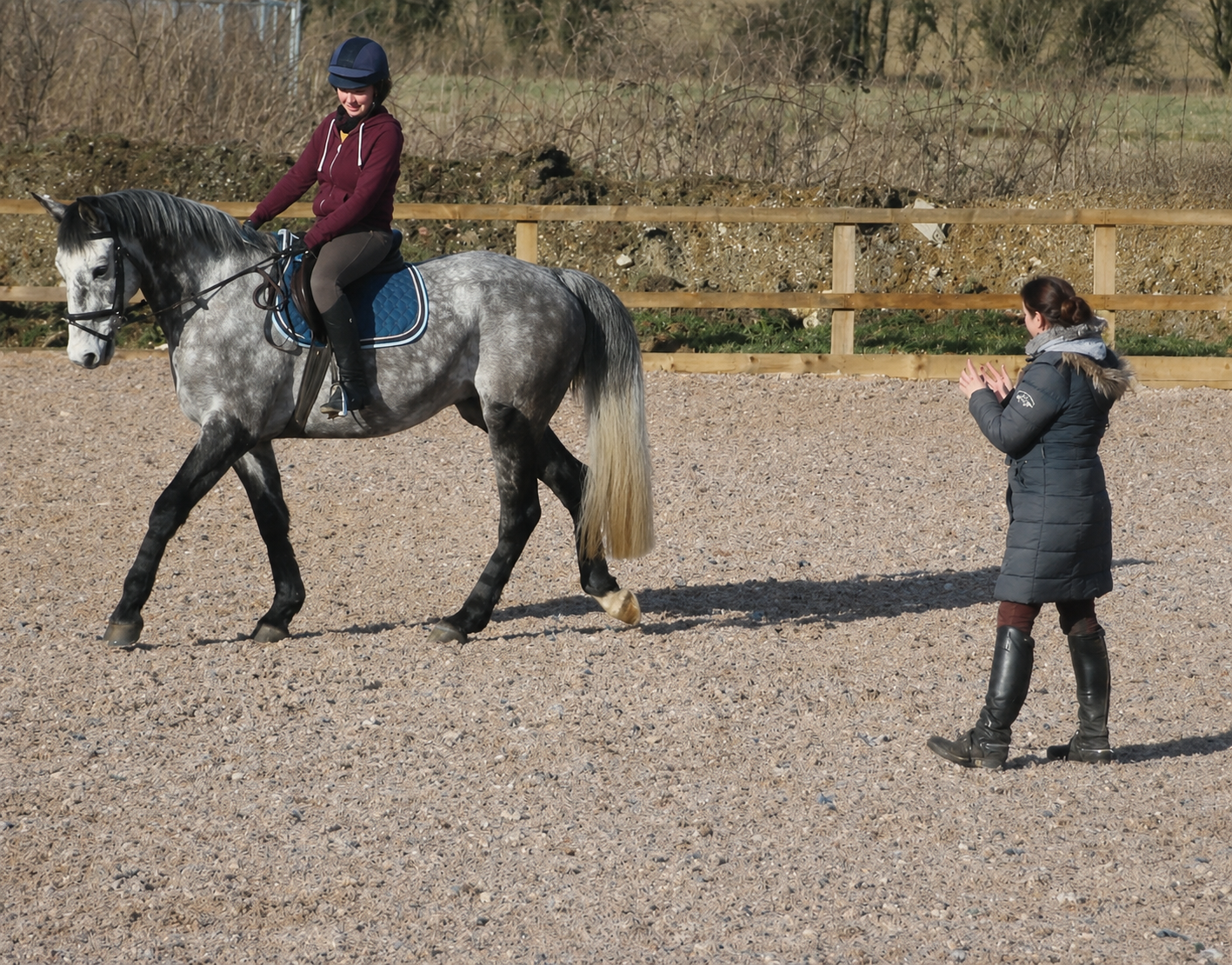
As both an equestrian coach and a sport psychologist in training, I’ve experienced the coach-rider relationship from several different perspectives. I’ve been the rider, the coach, and more recently the practitioner supporting riders with their mental performance.
Over the years I’ve come to realise that while technical coaching is important, the quality of the relationship between a rider and their coach can have just as much influence on learning, confidence and performance.
Are We Teaching or Coaching?
When I first qualified through the British Horse Society (BHS), we were known as instructors. Later, this changed to accredited coaches. At the time it sparked plenty of discussion.
Were we instructors or coaches?
Should we be teaching, or should we be coaching?
One explanation has always stayed with me:
Teach riders what they don’t yet know, then coach them to apply that knowledge.
Looking back through the lens of sports psychology, this fits well with what we know about motor learning.
Initially, riders need knowledge and understanding, (the cognitive stage of learning). As they develop, coaching helps them practice, refine skills and eventually perform automatically during competition, (the associative stage).
However, my studies have also taught me that how we coach is only part of the picture.
The relationship itself may be even more important.
Why the Coach–Rider Relationship Matters
A positive coach-rider relationship doesn’t simply make lessons more enjoyable.
It creates an environment where riders feel psychologically safe enough to learn, make mistakes, ask questions, and gradually push beyond their comfort zone.
This is particularly important for riders who struggle with confidence or performance anxiety.
When riders feel judged or misunderstood, learning often slows. When they feel supported and understood, they’re far more likely to embrace challenges and continue to develop.
Effective Coaching Isn’t Just About Winning
Professor Sophia Jowett, one of the world’s leading researchers into the coach-athlete relationship, suggests coaching can be viewed using a simple 2 × 2 framework.
Effective and Successful
This is the ideal.
The relationship supports both performance and psychological wellbeing.
The rider develops confidence while also improving results.
Effective but Unsuccessful
Sometimes a coach creates an excellent learning environment, but performance improvements take longer than expected.
The relationship is still positive and supportive, even if competitive success hasn’t yet followed.
Ineffective but Successful
Perhaps the most interesting category.
Performance may improve, but at the expense of the rider’s confidence, enjoyment or wellbeing.
From the outside this may appear to be “good coaching”, but internally the rider may be experiencing anxiety, fear of failure or emotional exhaustion.
Ineffective and Unsuccessful
In this situation the relationship fails to support either performance or wellbeing.
Neither the rider nor the coach benefits from continuing in this environment.
Jowett’s 3 + 1 Cs Model
Professor Jowett proposes that successful coach-athlete relationships are built around four interconnected components.
Closeness
Closeness is built on trust, respect and mutual regard.
When riders trust their coach, they’re more willing to step outside their comfort zone, try something new and accept constructive feedback.
Commitment
Commitment reflects the willingness of both coach and rider to invest in the relationship over time.
Riders should feel their coach is genuinely interested in their long-term development rather than simply delivering the next lesson.
Complementarity
Complementarity describes how effectively coach and rider work together.
Rather than coach and rider working against one another, both understand their roles and contribute towards shared progress.
Co-orientation
Co-orientation refers to shared understanding.
The best coach-rider relationships involve open communication, shared expectations and an appreciation of each other’s perspectives.
Building Better Coach–Rider Relationships
The best coaching relationships are about far more than technical instruction.
They are characterised by:
- Trust and mutual respect
- Open communication
- Shared goals
- Psychological safety
- Collaboration
- Long-term development rather than short-term results
When these elements are present, riders are far more likely to develop confidence, enjoy learning and reach their potential.
For me, one of the biggest lessons from studying sports psychology has been recognising that successful coaching isn’t just about producing better riders, it’s about helping people thrive while they learn.



0 Comments